
Unfortunately, recycling plastic is not as easy as one would think. The more complex a plastic item, the more difficult it is to recycle, making it sometimes impossible to recycle.
Let’s take the example of a simple plastic packaging like a plastic bottle. We have several parts:
- The bottle
- The plastic wrapper glued to the bottle
- The lid
- And sometimes there is another little piece of plastic inside the lid to ensure impermeability and product safety.
Each one of these plastic parts could be made of different types of plastics. Some may be recyclable, others not. And sometimes you may need to separate each component to ensure the highest potential for recycling. So in this example above, remove the plastic label around the bottle (unlikely to be recyclable, so you can throw in the regular trash) and keep the lid on the bottle ready for the recycling bin.
In the end, how do you know what to do? It’s not easy and unfortunately it requires time to research.
There is a solution though. Packaging and product designers should always conceptualize their products with this recyclability issue in mind, no matter which material they use, whether plastic, metal, glass, etc. They should create their product in a way that will:
- Optimise the use of materials to facilitate the recycling process by following the following design rules:
- Prioritize the functionality of the packaging.
- Avoid toxins.
- Use one single material when possible.
- If multiple materials must be used, make sure that they are easily separable.
- Communicate the material composition and end-of-life options on the packaging.
- Take a system perspective on recycling by thinking of the entire lifecycle of the product being designed:
- Use recycled materials whenever possible and encourage future demand for recycled materials, which will, in turn, improve the economic viability of recycling efforts.
- Monitor the efficiency of forward and reverse logistics.
To learn more about the recyclability of plastic packaging as well as packaging made of other materials, visit the Netherland Institute for Sustainable Packaging.
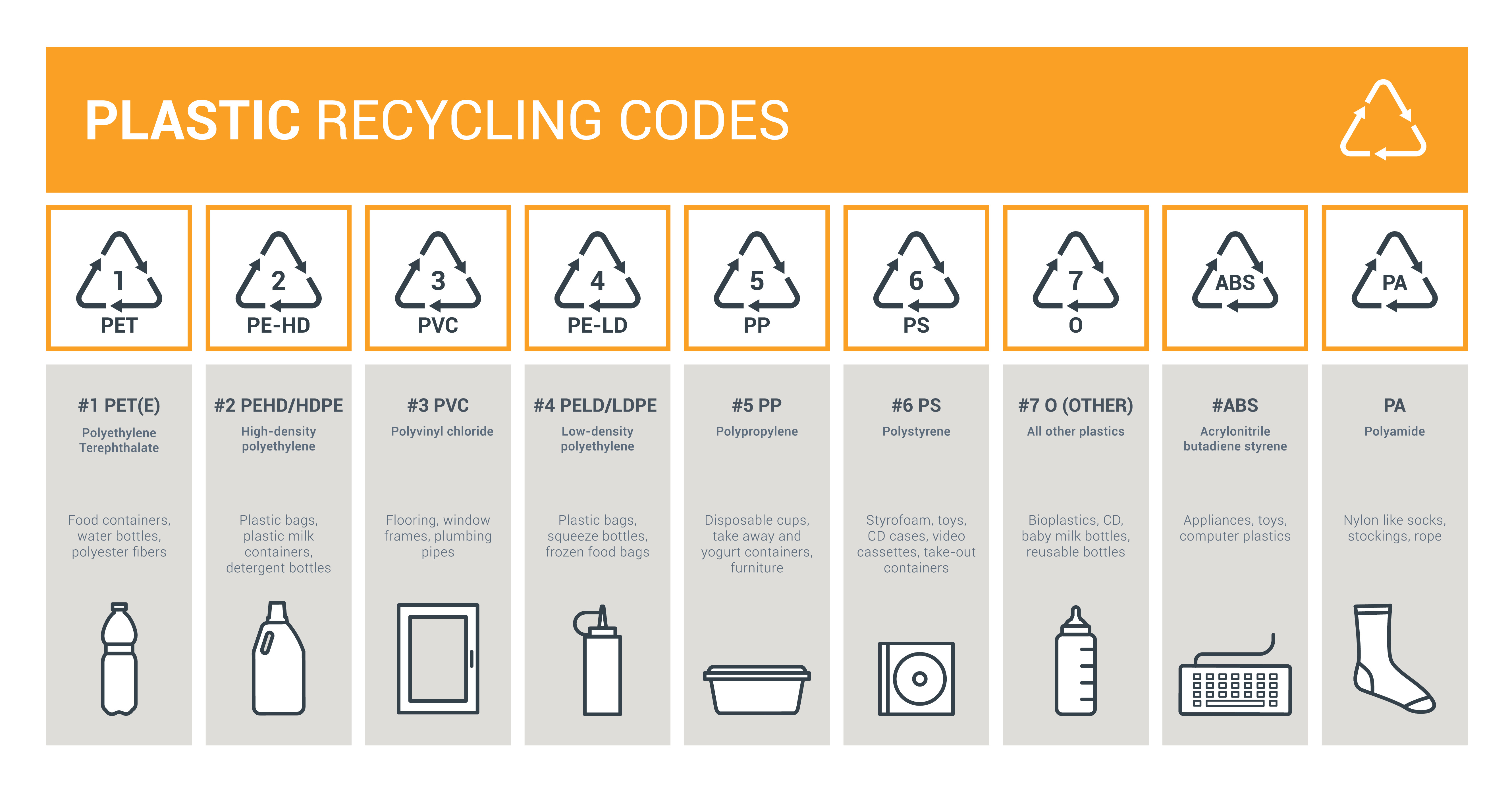
Now, you may be wondering what are all those “numbers” that are sometimes located on a plastic packaging. These numbers inform the consumer about the type of plastic used and give an indication of its recyclability. In general (and depending on your waste management company), #1, #2, #4 and #5 are easily recyclable. The others usually require special attention and need to be dropped off at recycling centers outside of your community’s waste management program. If you want to learn more about each type of plastic from P.E.T. to P.A, take the time to read this great article from eartheasy.com on each type of plastic and study the image below.
 mygreenhome.blog